AI brain fry. Are engineers starting to experience what people leading complex technology transformations have known for years?
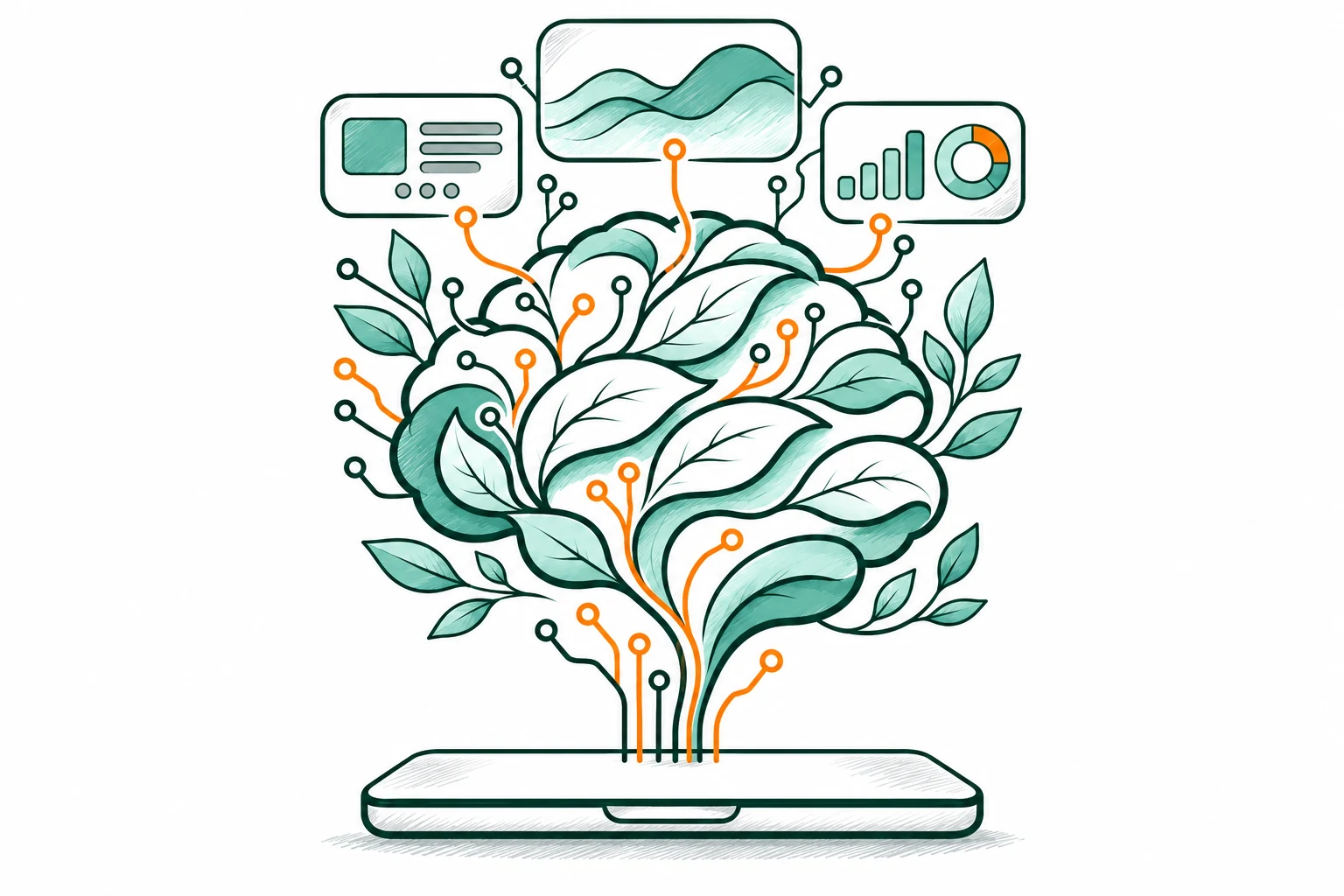
I've been reading more and more about engineers feeling mentally exhausted from working with multiple AI agents. The constant switching between windows. Monitoring outputs. Checking results. Making decisions. Going back to fix something that was supposedly finished. And I keep thinking: this feels very familiar.
For many years, I've worked in HR Technology, managing complex environments involving Workday, other enterprise platforms, integrations, processes, data and, of course, people. Projects where you constantly move between the smallest technical detail and the bigger picture. Where you need to understand not only whether something works, but whether it makes sense as a whole. And where a decision made in one area can create consequences somewhere completely different.
It's a very particular kind of mental work. And it can be incredibly exhausting.
I understand why engineers who once spent hours in deep focus might struggle with this shift towards coordinating and supervising multiple AI agents. But I also think there's something important to recognise.
This isn't entirely new. Many people managing complex programmes, products and technology ecosystems have been working this way for years.
What's new is the speed. AI can generate work faster than we can properly evaluate it. We can run several agents simultaneously, but our ability to understand, connect and judge their outputs is still very human. And that's where things become interesting.
Recent research has even introduced the term AI brain fry to describe the cognitive exhaustion associated with intensive AI use and oversight.
But I think there's another part of this experience that deserves more attention.
Our need for closure.
We want to finish something. To tick that box. To see that deployment completed, that integration finally working, that problem resolved. And feel that little moment of satisfaction.
I can't count how many times I've celebrated a successful deployment with my own little happy dance. Sometimes literally. 😊 After weeks of complexity, unexpected issues, testing and retesting, seeing something finally work is an incredible feeling.
But here's what I've had to learn over the years.
In complex work, gratification often comes much later than the effort.
Sometimes a productive day doesn't end with anything visibly finished. You've investigated a problem. Prevented a mistake. Understood a dependency. Changed your approach. Made a difficult decision. And tomorrow you may have to revisit it all again.
That doesn't mean you've made no progress. It means the progress isn't always immediately visible.
And learning to recognise that requires patience. Not just patience with the project, but patience with yourself.
I've also experienced the less enjoyable side of this kind of work. Those nights when it's 3 a.m. and your mind is still processing information. Connecting things. Replaying conversations. Trying to solve something that technically belongs to tomorrow.
Your laptop is closed, but your mind hasn't quite received the message.
It took me time to understand that being good at handling complexity doesn't automatically mean being good at switching it off.
And switching off is a skill too.
Over the years, a few things have become particularly important to me.
1. Recognise the progress you cannot see.
At the end of the day, ask yourself what you've actually moved forward. Not just what you've completed.
What did you understand today that you didn't understand yesterday? What risk did you identify? What decision did you make? What did you learn?
Sometimes that is the real achievement.
2. Learn to live with unfinished work.
This one is difficult, especially when you genuinely care about what you're doing.
There's always another improvement, another dependency, another thing to check. But not everything can be closed today.
Sometimes you need to define what enough for today looks like, even when the bigger goal is still far away.
And trust the process. Patience is not passive. It's part of doing complex work well.
3. Don't confuse activity with value.
More agents, more outputs, more open windows and more tasks completed don't necessarily mean better results.
The real value often lies in understanding how everything connects. And knowing when to stop, question something or change direction.
4. Have something in your life that doesn't need to become another project.
I truly believe in doing work you love. But I've also learned that when something you love becomes your work, the relationship with it can change.
Suddenly there are expectations. Deadlines. Results. Performance. Even the things we once did purely for pleasure can start to feel like obligations.
That's why I think it's so important to have something outside work that you genuinely enjoy. Something you don't need to optimise, monetise or turn into an achievement. Something that simply lets you be present.
And perhaps that's one of the most overlooked parts of sustainable performance.
We talk a lot about focus, productivity, efficiency and now AI-powered workflows. But much less about how to recover from constantly having to think, evaluate and decide.
I don't believe the biggest challenge of the AI era will be learning how to manage more agents.
I think it will be learning how to manage our own attention, expectations and energy while working alongside them. And for organisations, learning how to design work that respects those human limitations.
Because technology can process multiple things at once. We can connect multiple perspectives, too. But that doesn't mean doing so comes without a cost.
And perhaps, sometimes, the most valuable thing we can do is close the laptop, accept that today's progress was enough, and leave tomorrow's problems for tomorrow.
The happy dance can wait until the next deployment. 😊
LinkedIn · News, Ideas, Knowledge Sharing
Sources & limits
- Bedard et al. (5 March 2026). When Using AI Leads to “Brain Fry”. Harvard Business Review. BCG public summary. Workplace survey; association does not establish causation.
- Chou et al. (24 October 2026). Developers as Managers of AI Agents: A Workplace Shadowing Study. arXiv:2610.33588. Preprint; small observational sample.
- Leroy, S. (2009). Why is it so hard to do my work? The challenge of attention residue when switching between work tasks. Organizational Behavior and Human Decision Processes, 109(2), 168-181. Experimental work on task switching; not an AI study.
The workplace parallels and suggestions in this essay are personal observations, not findings tested by these studies.
The PDF opens in a new tab. Use the download icon to save your copy.
All articles